
The Fifth Commandment: “Put Your Chin in There”, 2022 Hand portraits of the Ophthalmologist and the Psychologist

My father’s left hand. Bronze life cast.

My father’s hands, exterior. Bronze life casts.

My father’s hands, exterior. Bronze life casts.

My mother’s hands, exterior. Bronze life casts.

My mother’s hands, interior. Bronze life casts.

My mother’s hands, interior. Bronze life casts.
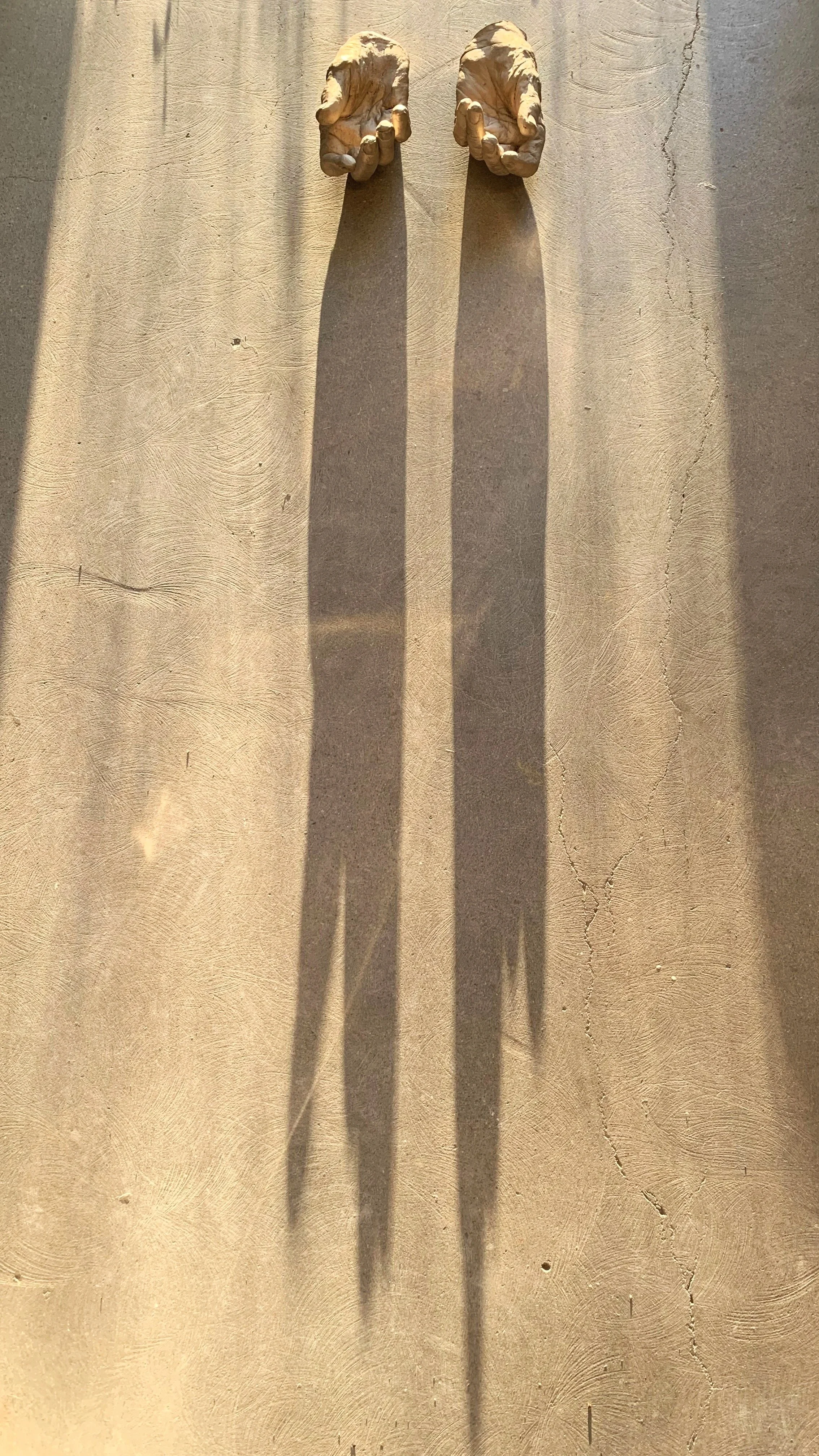
My father’s hands on the floor of my studio, with shadows cast by the setting sun, October 31, 2022.
In December 2019, I visited my elderly parents in London; I wouldn’t see them again for another eighteen months, due to the COVID-19 pandemic.
I brought some alginate (body safe casting material) with me to make molds of their hands, something I’d been thinking of doing for a while, given their advanced age; they were then in their early 90s.
My father sat through the few minutes required for the alginate to set around his right hand, muttering (with a customary grin):
“Now I’ll have to walk around with my hand in bucket of pink goo for the rest of my life.”
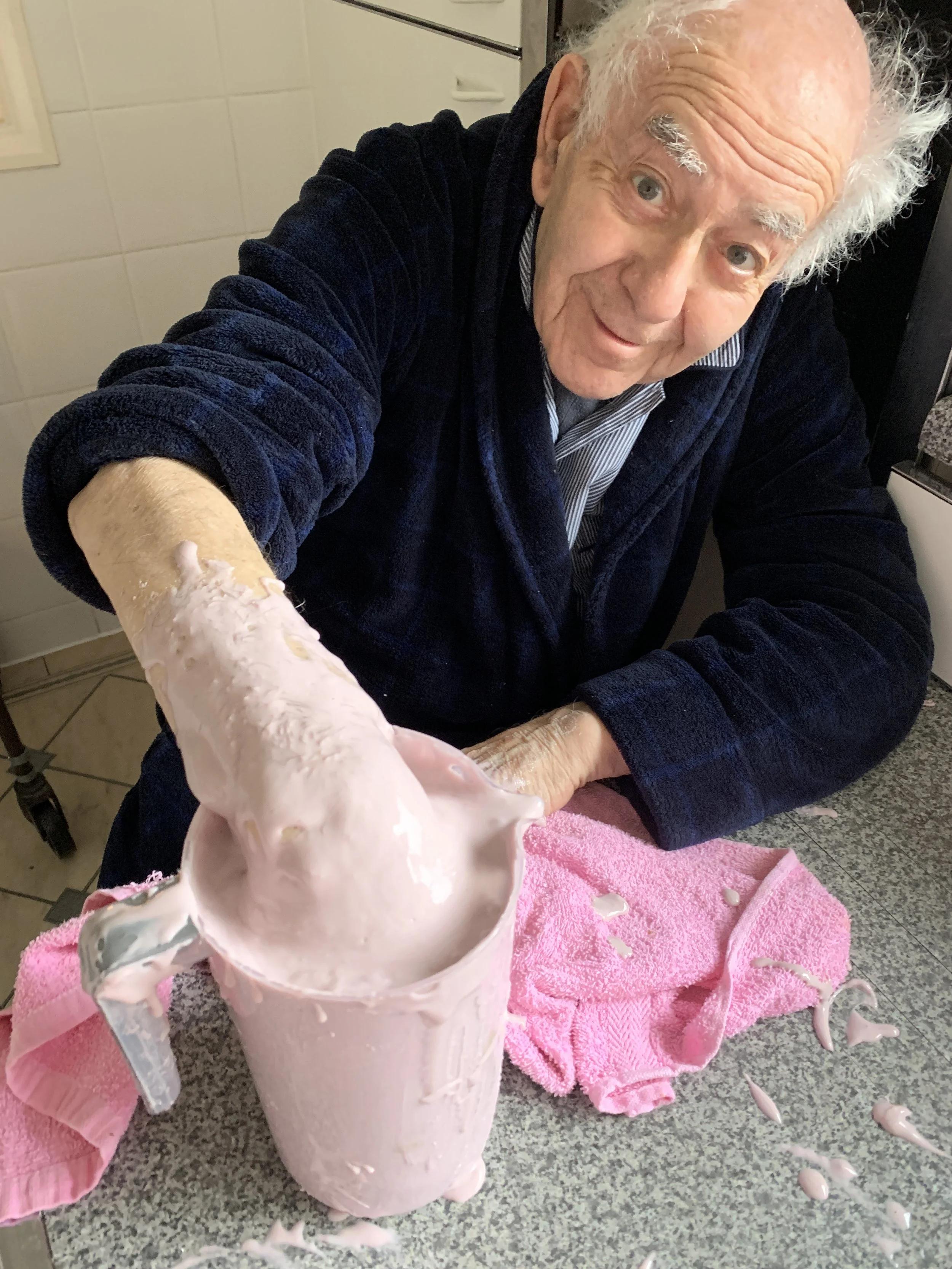
He didn’t have the patience to let me do his left hand. And given the mess I’d already made of their apartment kitchen—with all the plaster mixing and alginate de-molding—I didn’t feel I should press my luck by asking my mum to ‘sit’ for her casts.
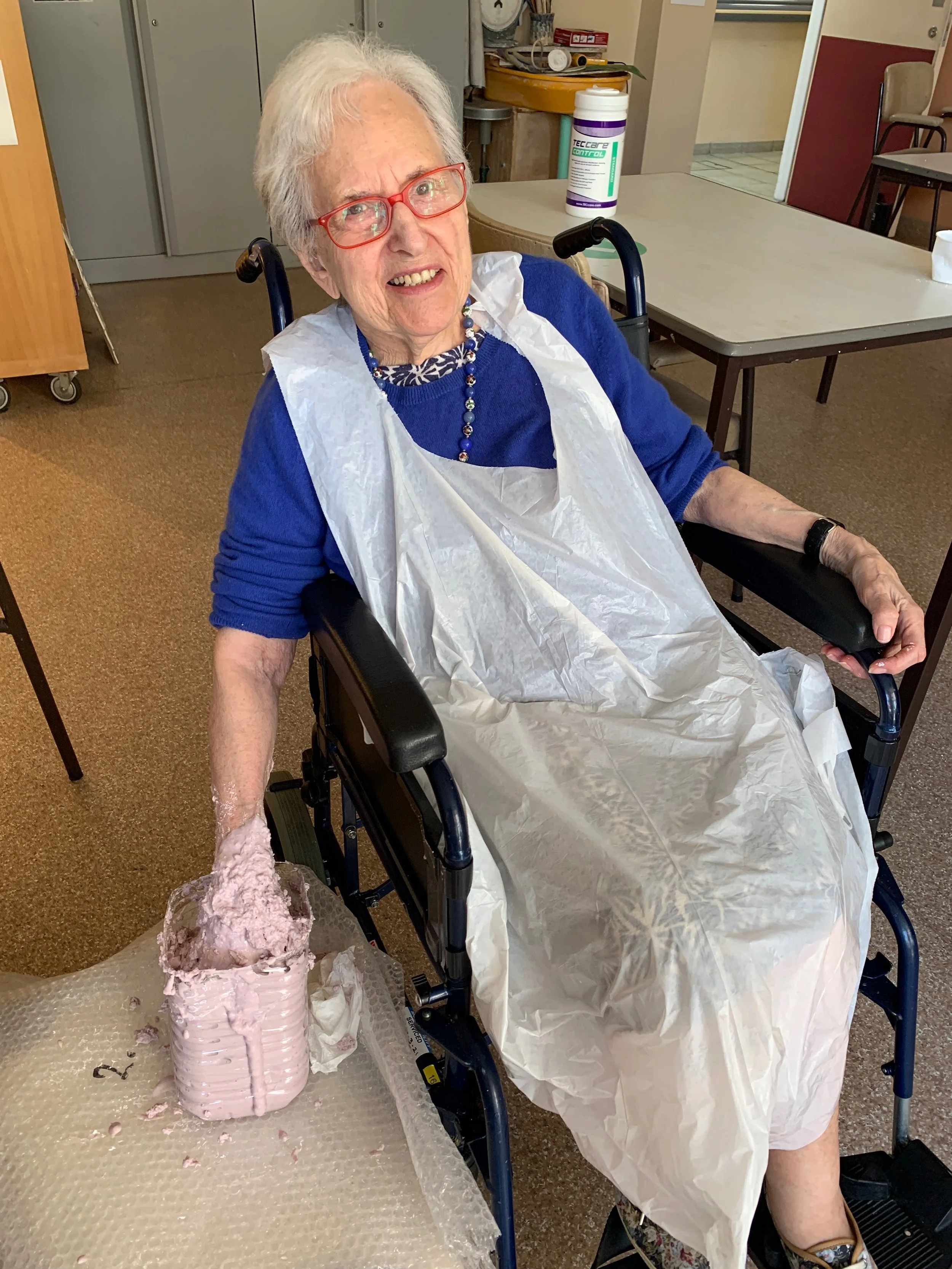
I had to wait until May 2021, when international travel to England was feasible once again (albeit only with lots of paperwork and many COVID tests). I was able to capture Dad’s left hand, and both of my mother’s, in the Activities Room at the nursing home in South London to which they had moved.
In spring 2022, I tidied up the plaster casts, fixing lots of glitches along the way; the details of my mother’s engagement ring were particularly tricky.
I made rubber molds around the plasters—which looked like rubber mittens—and built plaster mother-molds around them to keep the flexible rubber in proper alignment while foundry wax was poured into their hand-shaped hollows.
Next step: filling in a Milky Way of tiny air bubbles in the waxes using disclosing wax (the kind they use in dentistry to test if a new filling fits properly). Then I began building the sprue system around each wax hand, attaching tiny wax cylinders to each fingertip, to allow the bronze to flow into the fingers from the main sprues.
Over a week in July, I built ceramic shells around the hands, then did ‘burnout’—where the wax is ‘lost’ by heating the shells in a kind of giant outdoor rotisserie over (with a hole drilled in the shells to let the molten wax drain out). Bronze was poured into the now-empty shells later that month.
Then came the ‘chasing’: uncountable hours spent grinding off the sprues, bead blasting the bronze hands, and repeatedly fine-tuning details (especially the fingernails) using pneumatic tools—all while trying not to accidentally erase the unique lines on palms and knuckles.
This is the “Lost Wax” bronze-casting process, in all its tedious glory!
It was good to be able to show my father his bronze hands, on my next trip to London in September 2022—just a few weeks before he passed away.